Frame
Hardware
Firmware
Software
I wanted a way to control the main light in my room from a button or a voice command without interfering with the ability to use the light switch as normal. I decided to use a high torque servo controlled by an RF enabled arduino to flip the switch.
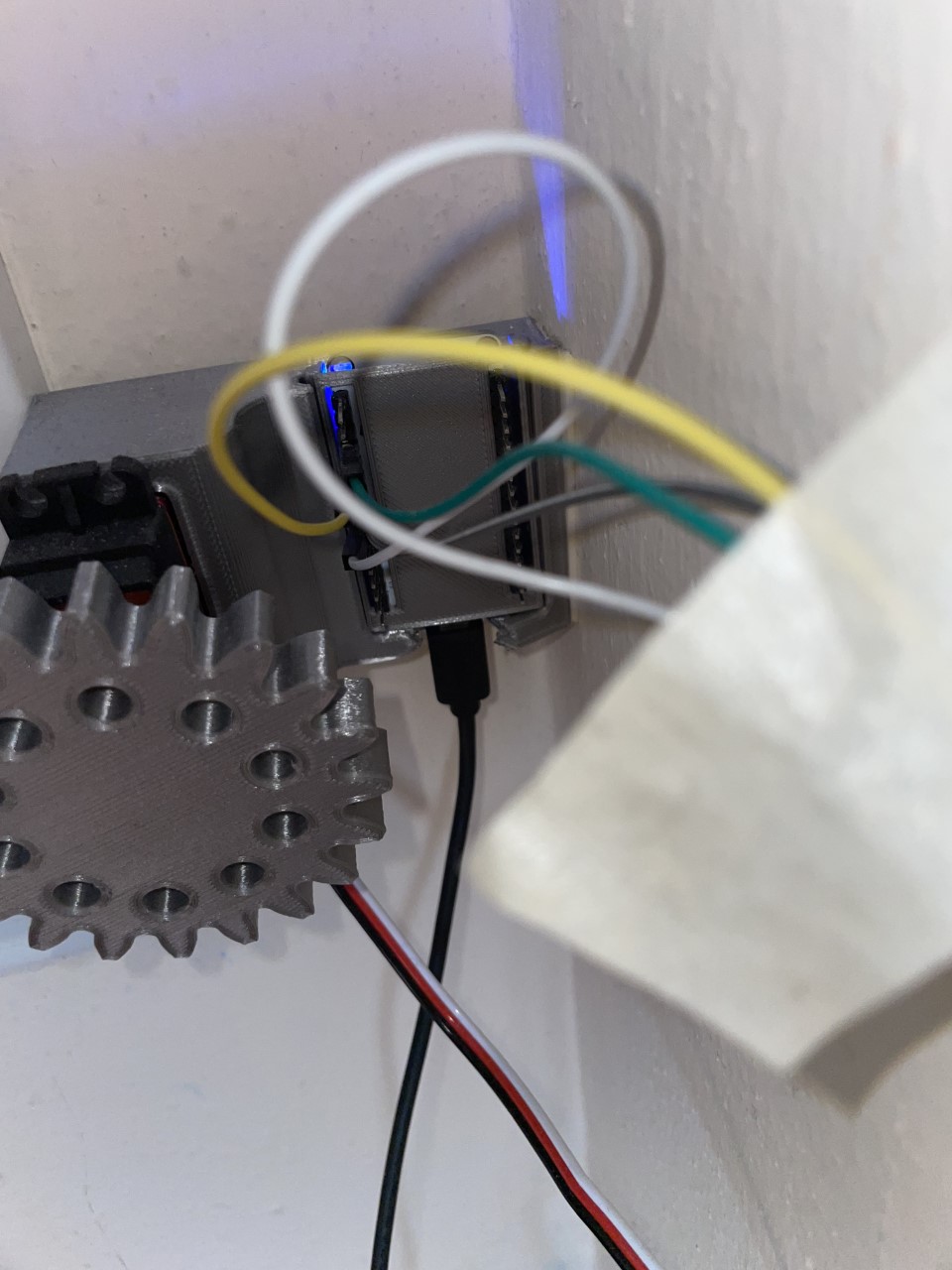
Living in Wisconsin during the winter means cold mornings. I wanted my wall mounted heater turn on a few hours before I woke each day so that I could wake up to a toasty room. Again using a high torque servo, I mated a printed gear to the servo and another to the knob on the heater, and controlled the position of the servo with an ESP8366
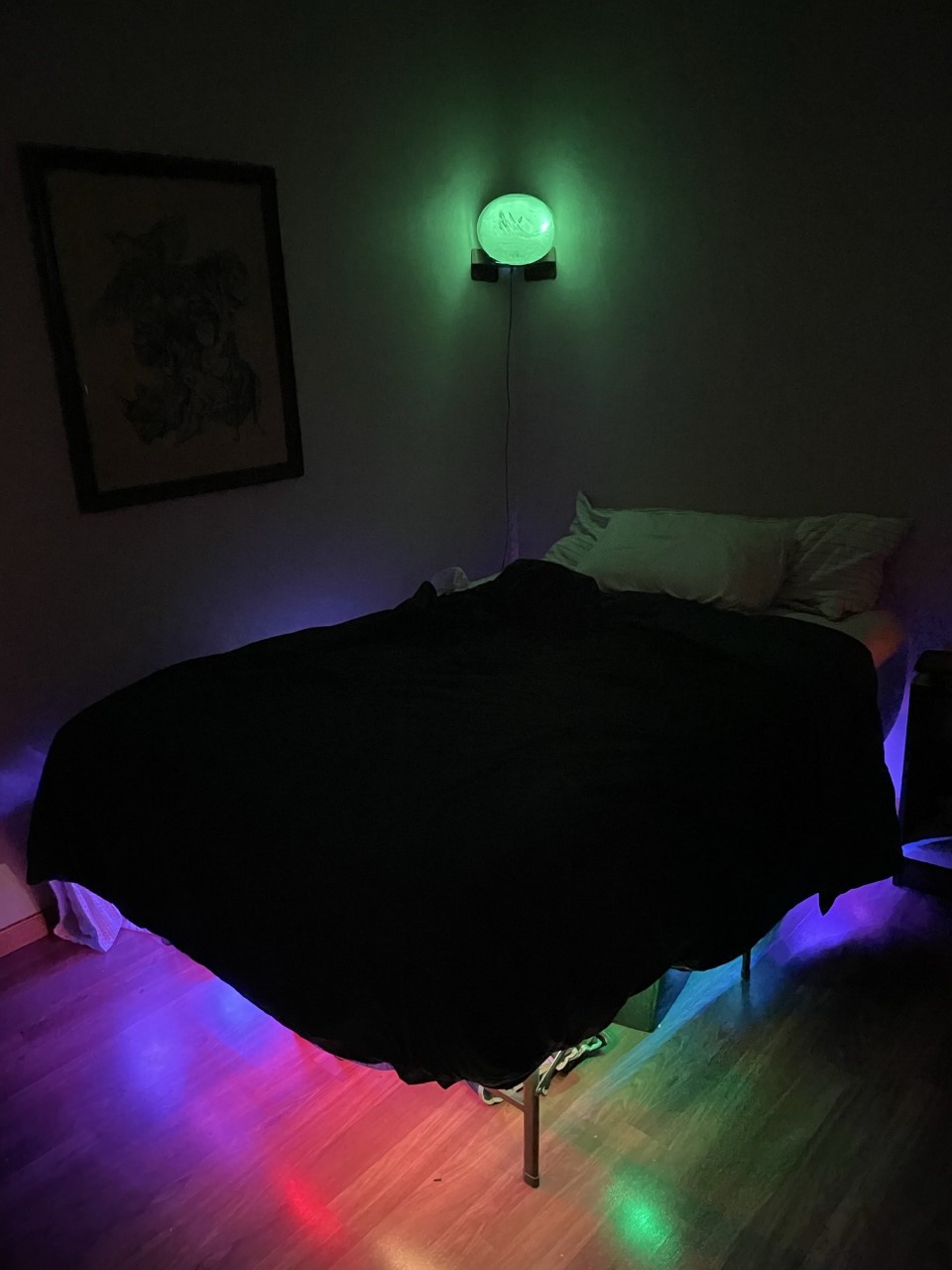
Finally, I linked all the previous automations to a central controller, in this case a photon. To capitalize more on the photon's capabilities, I made a laser-cut box with a painting by Bob Ross on the front, through with a set of LEDs could shine, creating a backlit painting. While I had the code, I also added LED strips throughout my room, all controlled by the photon.
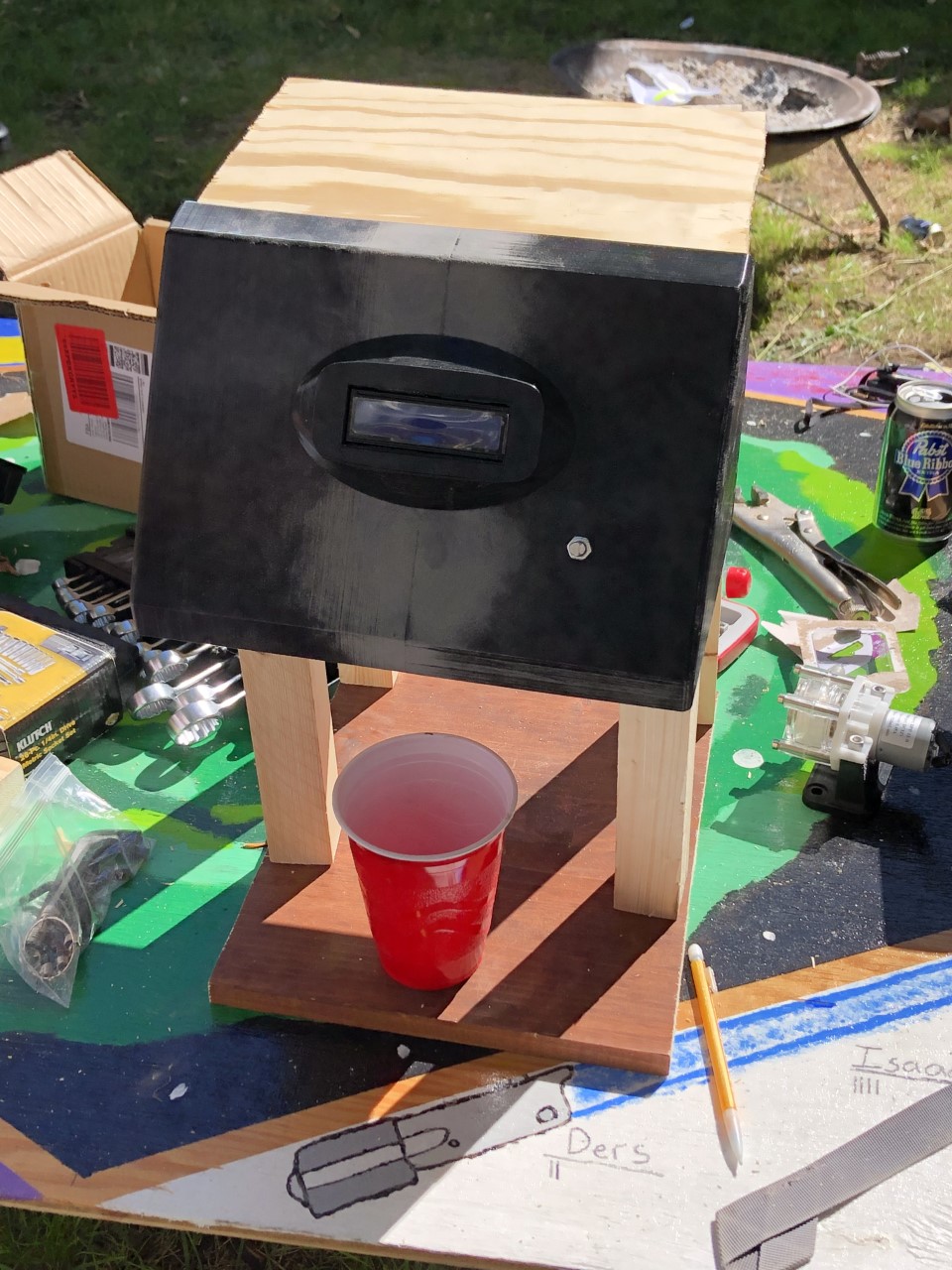
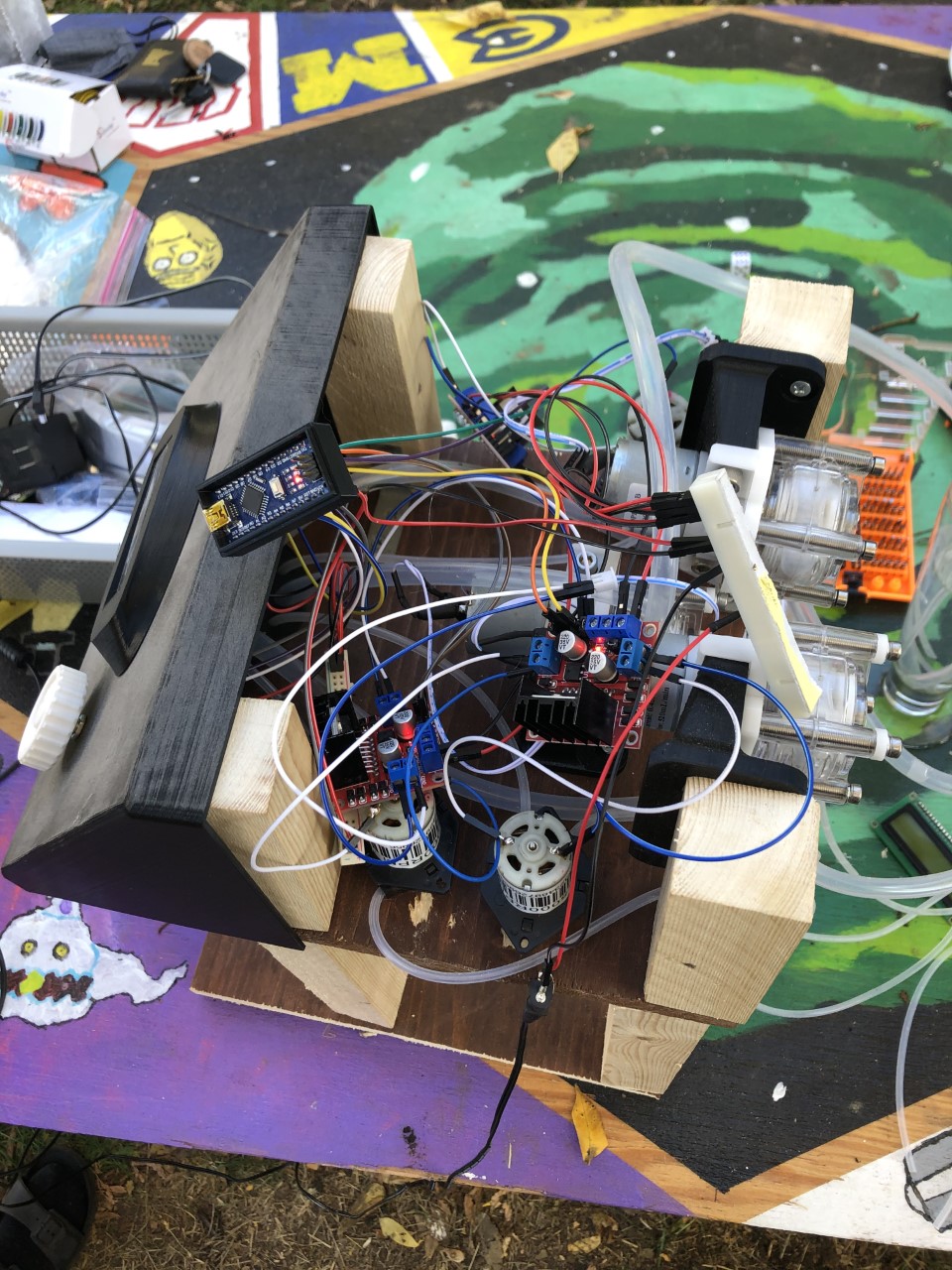
The first automation project I worked on outside of school was making this automatic cocktail mixer with a friend of mine during the first months of COVID. We built a wooden frame with a 3D-printed faceplate and an LCD selection screen, with guts consisting of an arduino and a series of peristaltic pumps and tubing. The final product was a device where the user could select a liquor and a mixer and the machine would dispense their cocktail into the cup below.
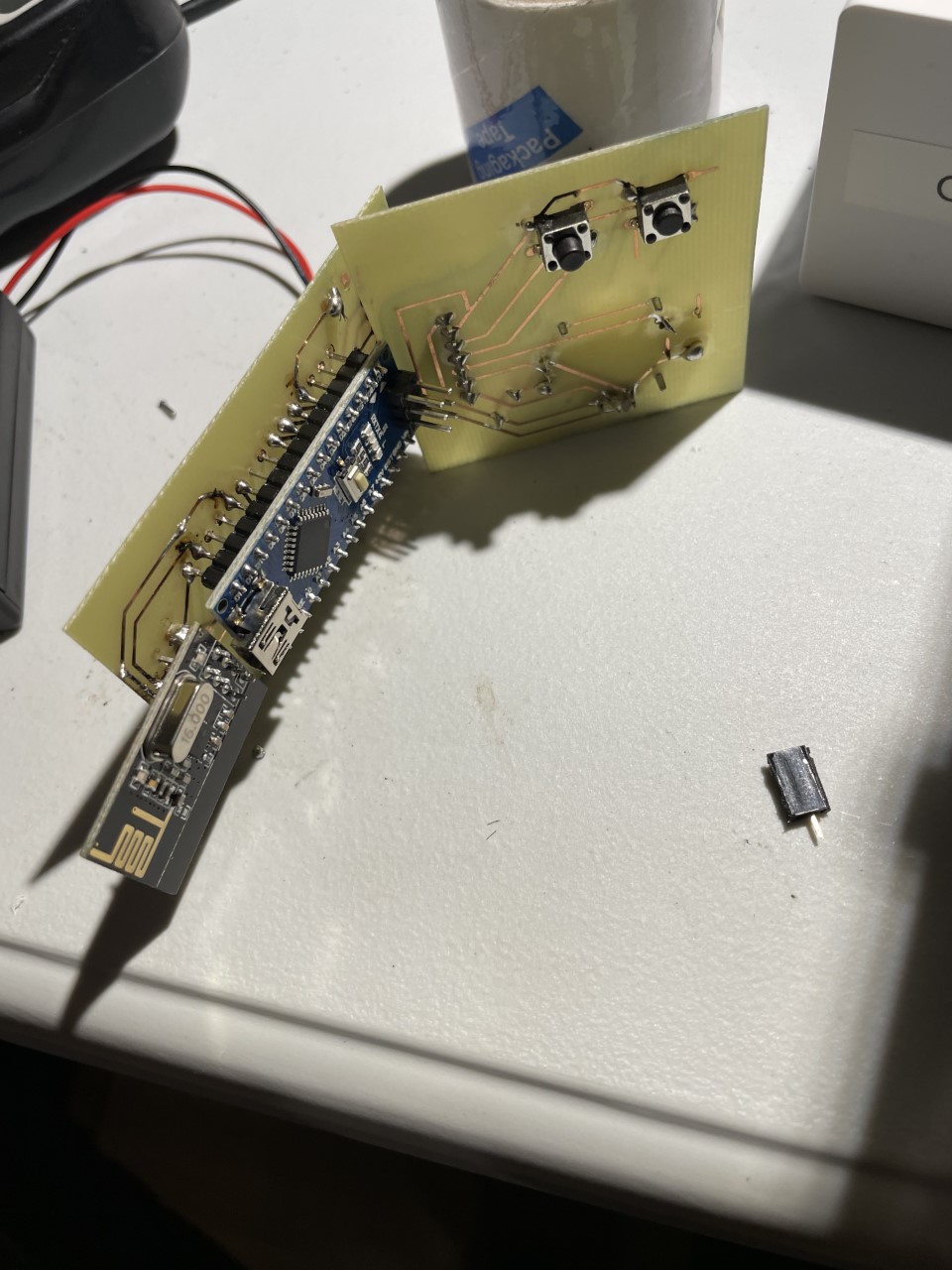
To get some experience with both PCB mills and PCB etching, I decided to make a DIY version of a joycon so that I could play games on my PC without a wired connection just using arduinos. This custom board assembly, which I hand etched by cutting the paths out on a vinyl cutter, connects a joystick and an A and B button to an arduion nano and an RF transiever, allowing me to send commands to a matched arduino-transceiver pair plugged into my computer.
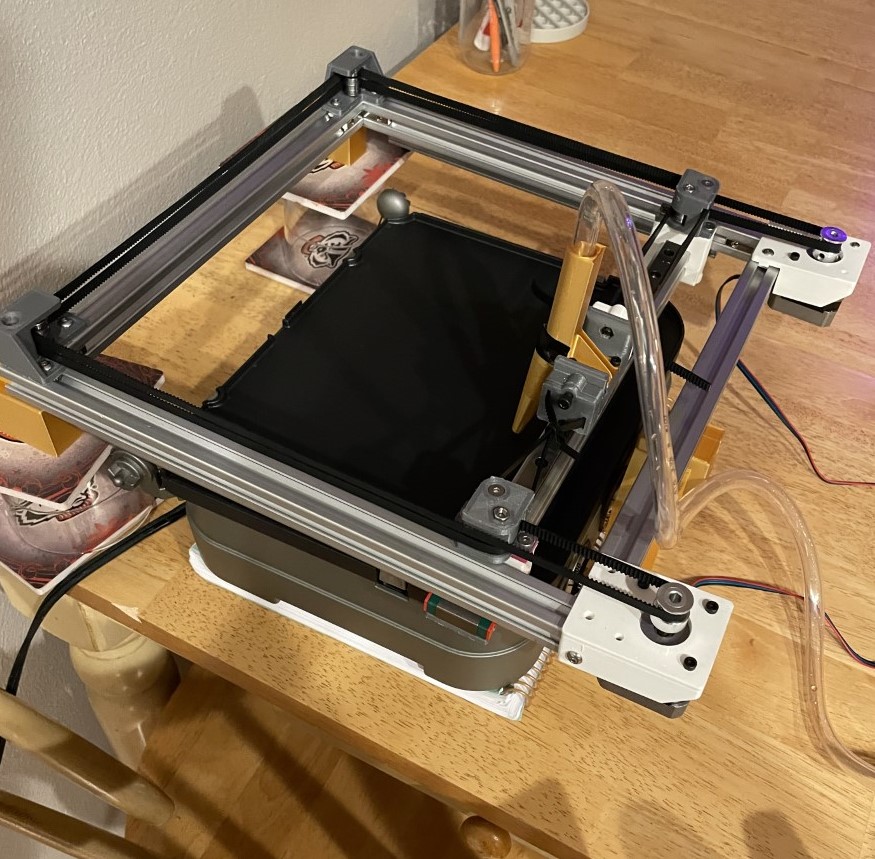
First, I built a coreXY axis frame out of T-slot aluminum extrusion, 3D printed connections, and stepper motors.
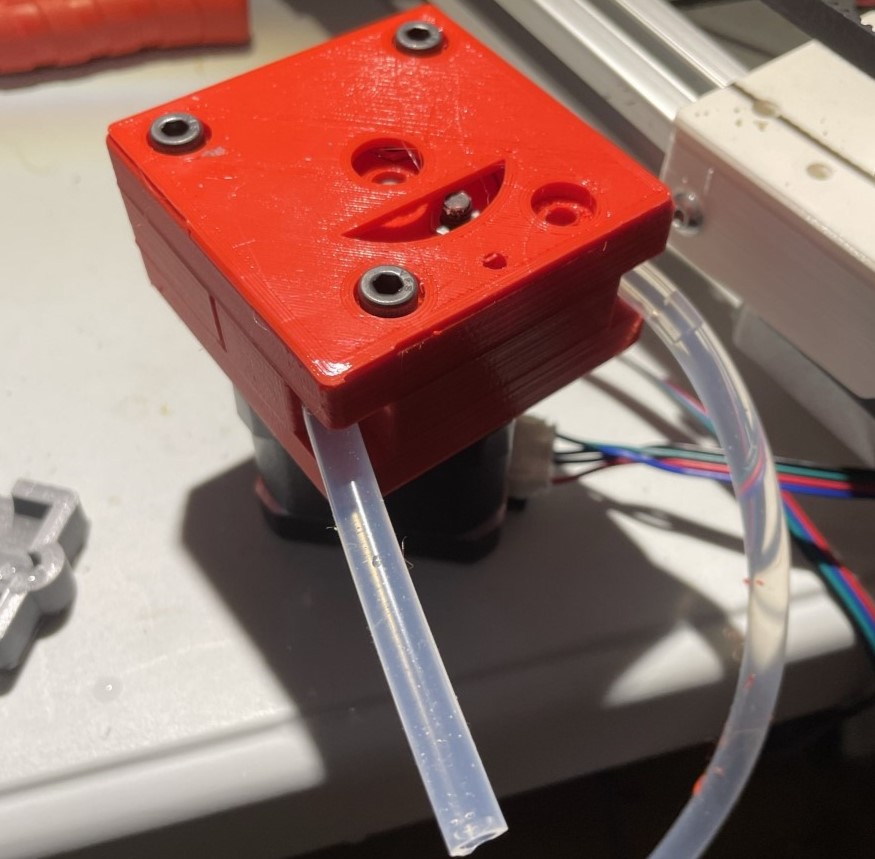
The active head, like the axis, is powered by a stepper motor. This system uses a printed peristaltic assembly on the motor to pump pancake batter onto the griddle.
UW-Madison 2022